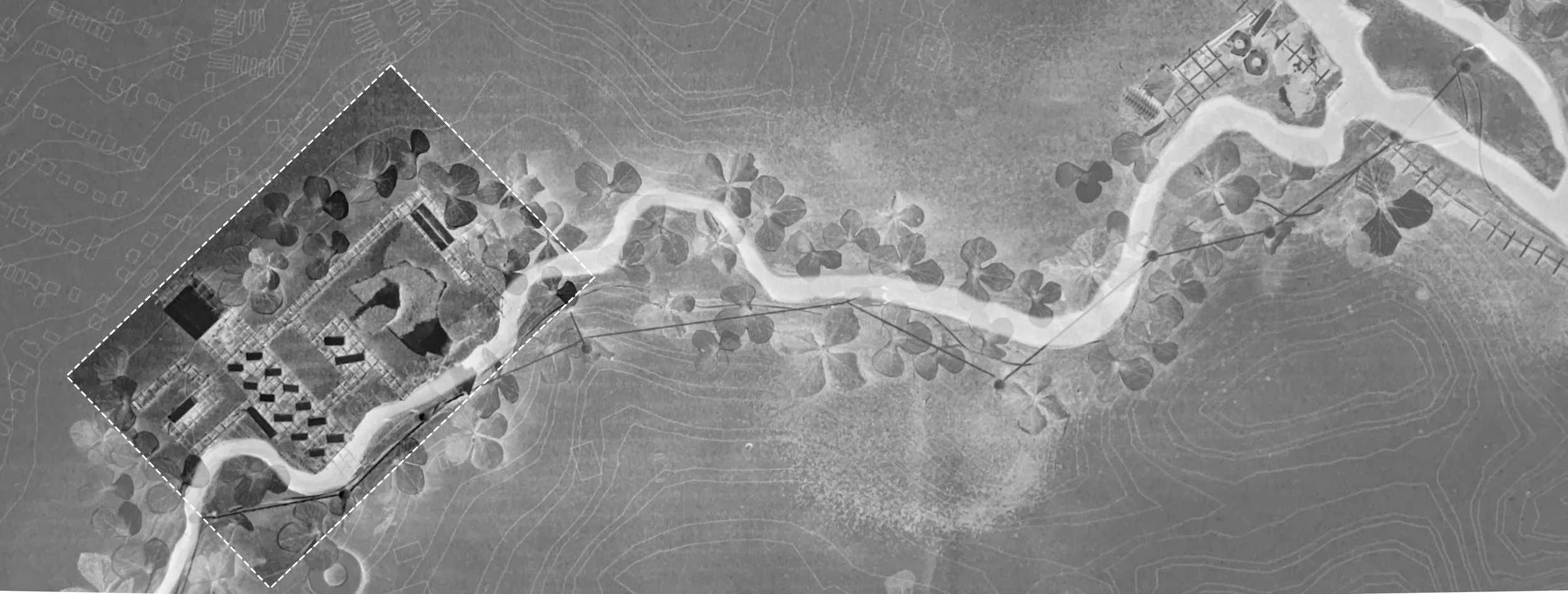
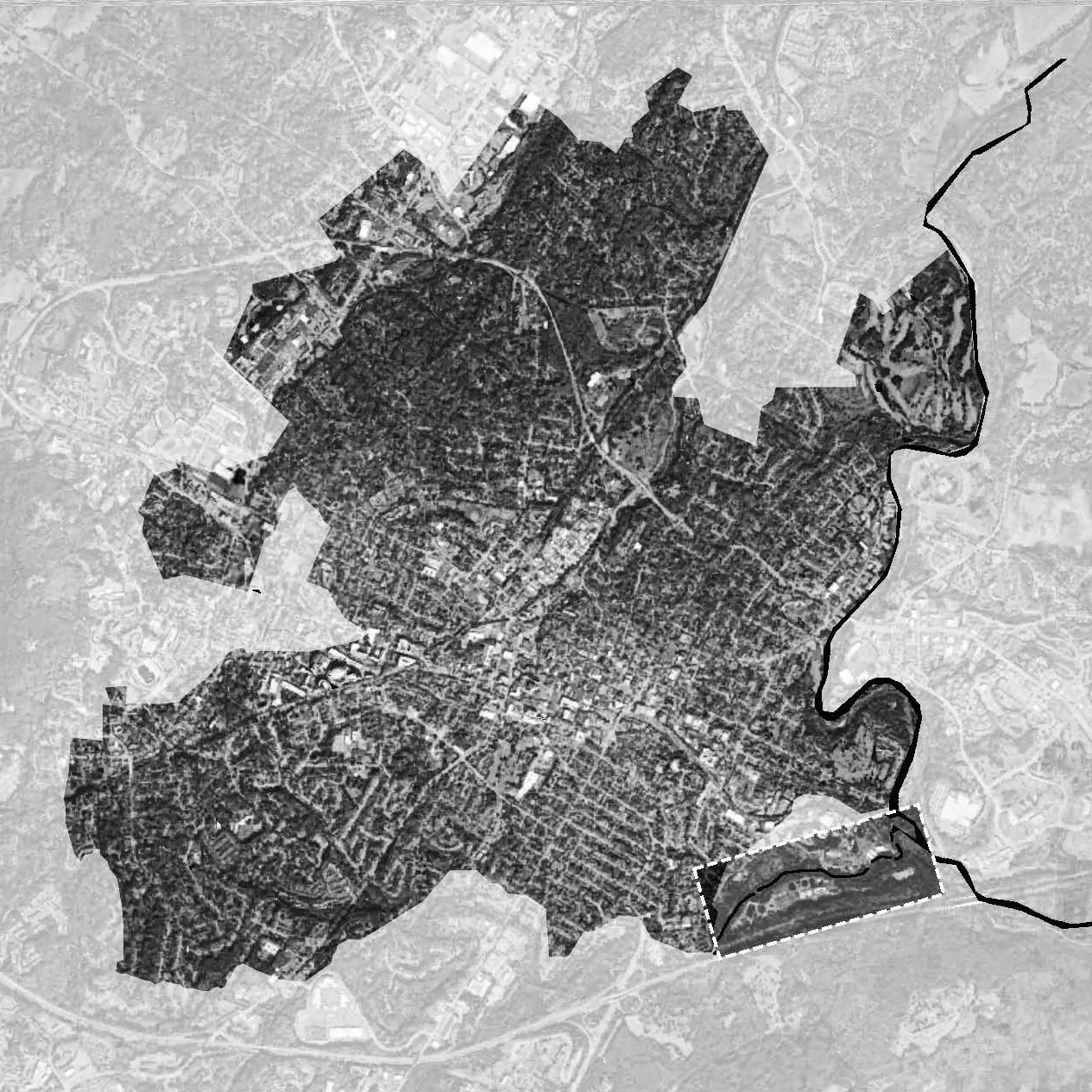
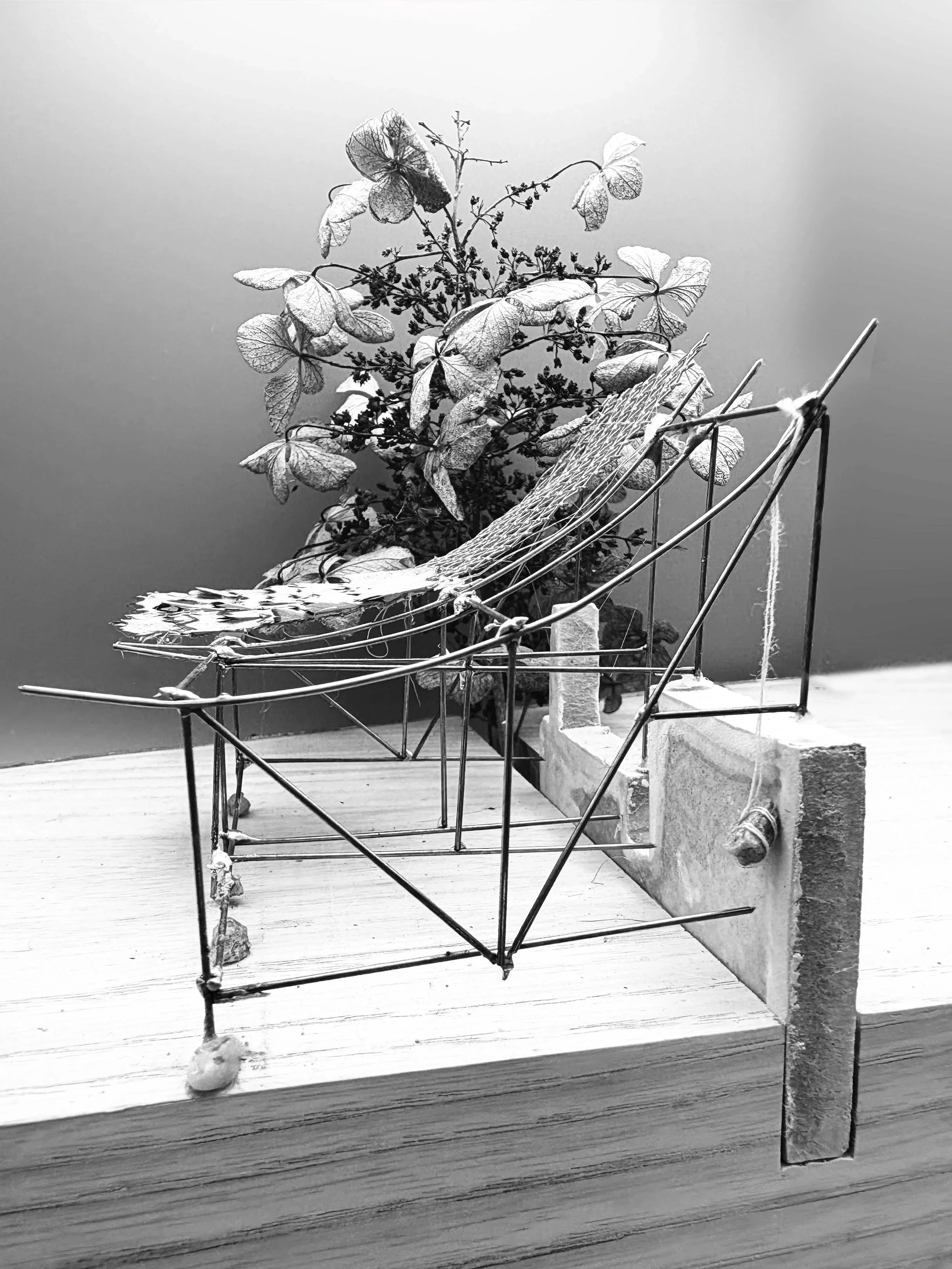
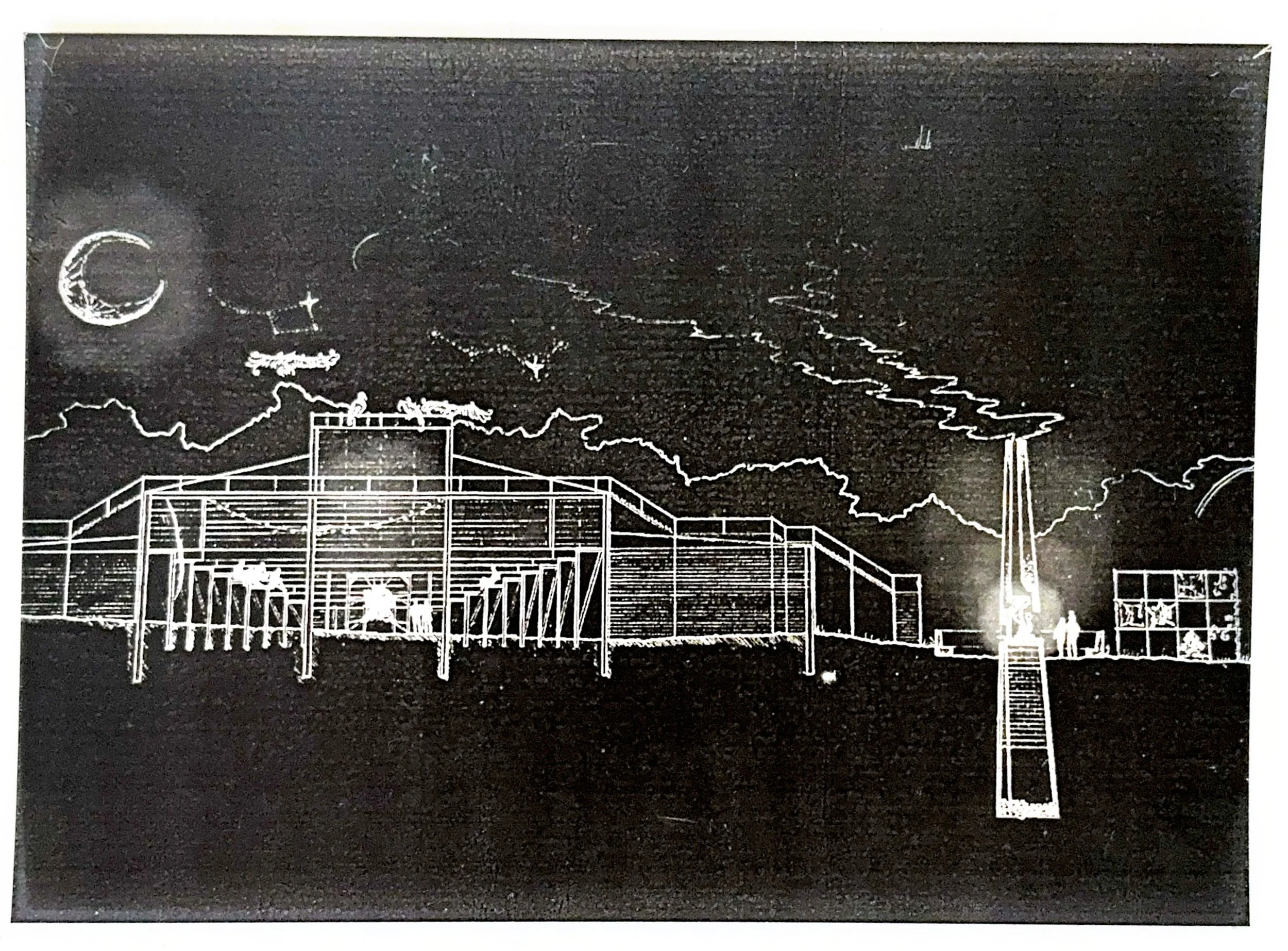
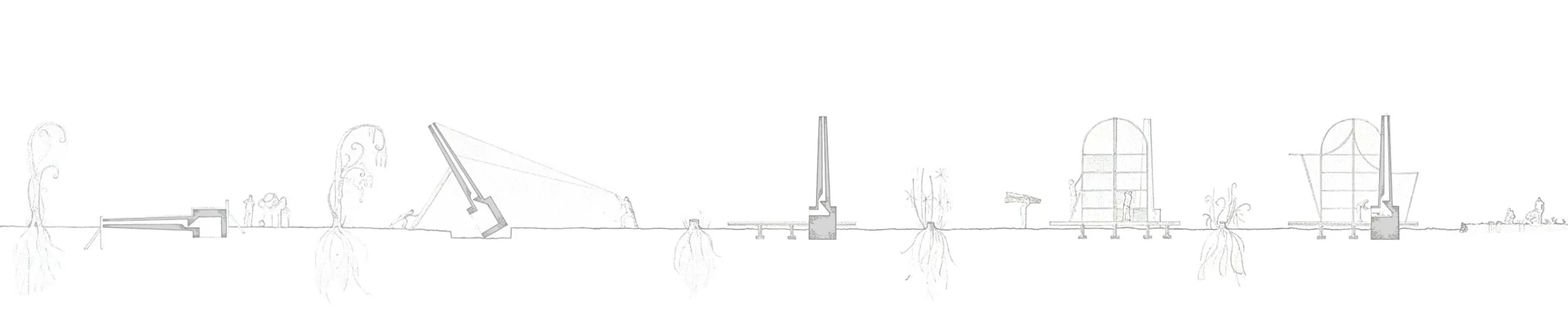
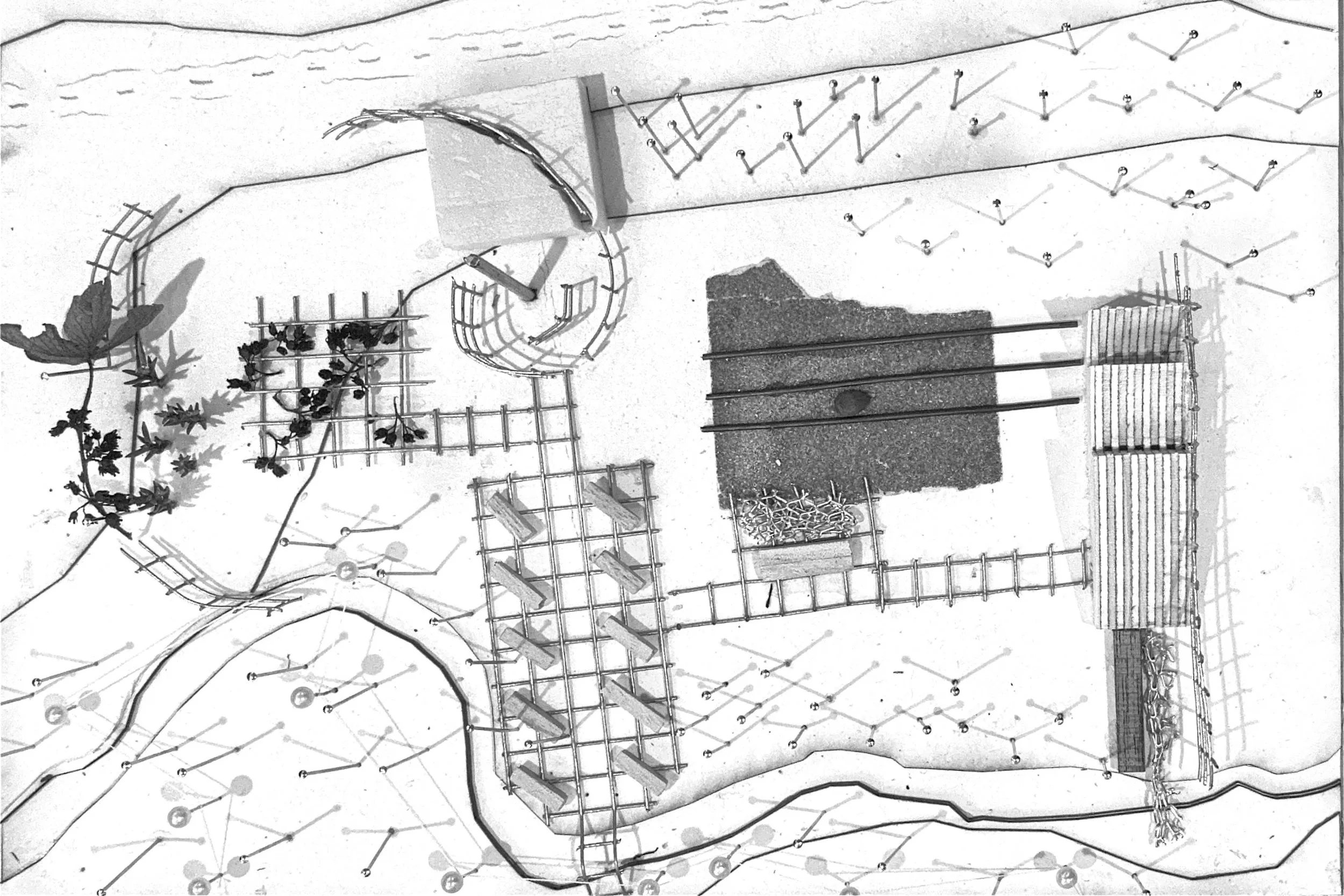
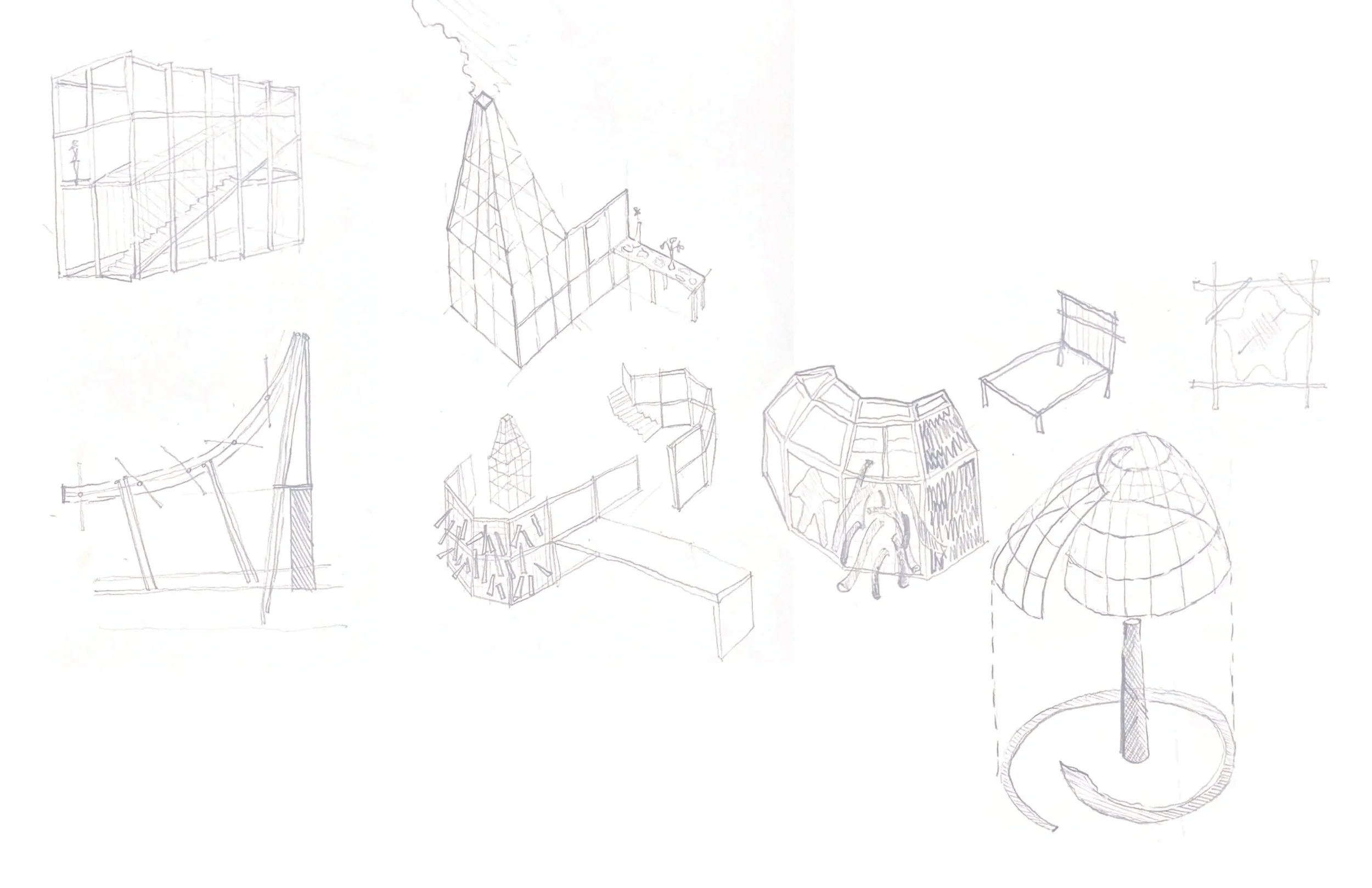
Craft is a catalyst for place making. By weaving together architecture, craft, and environment, this thesis explores how the Rivanna River can once again serve as a source of identity, pride, and community for Charlottesville, Virginia.
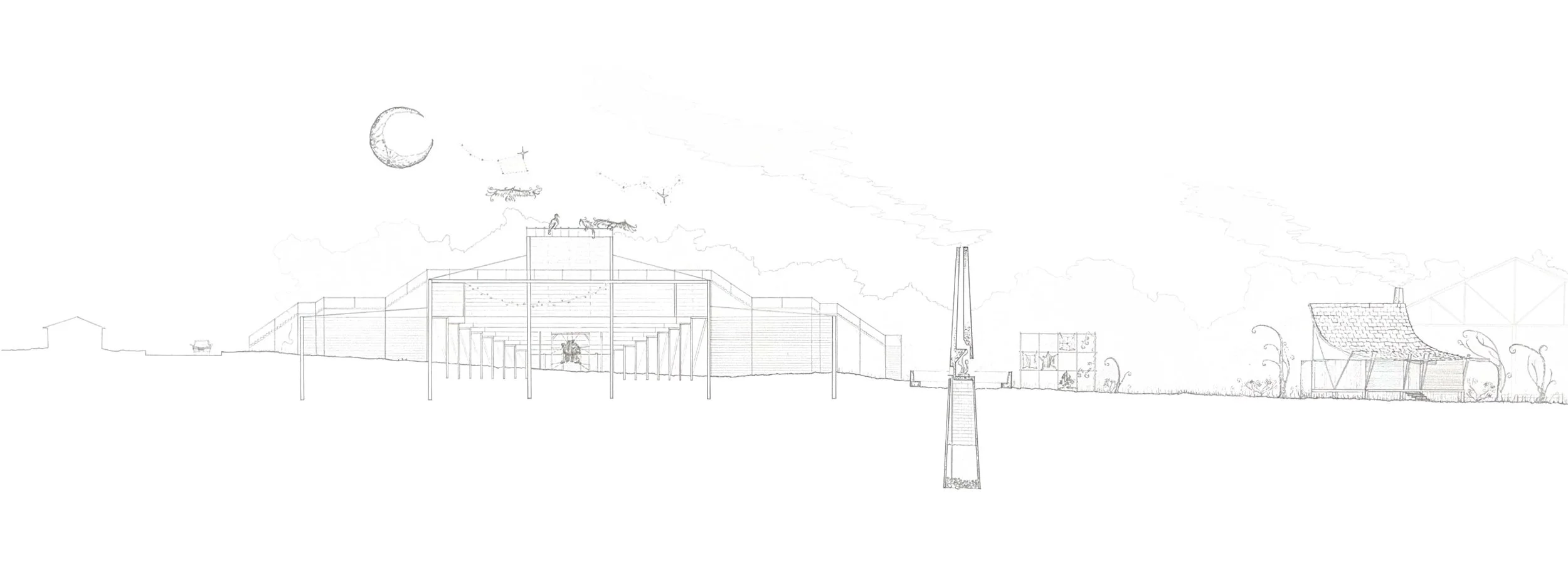
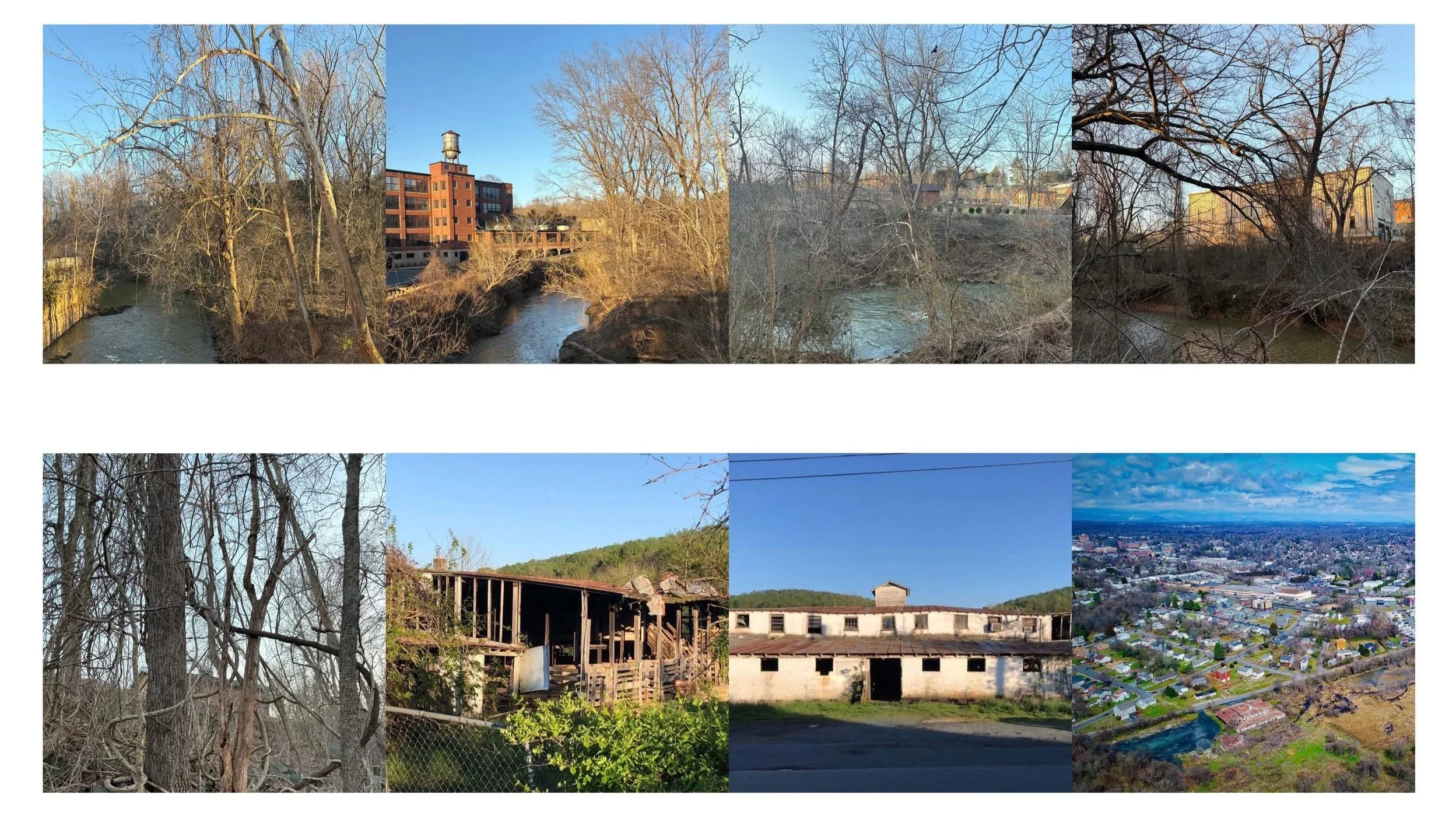
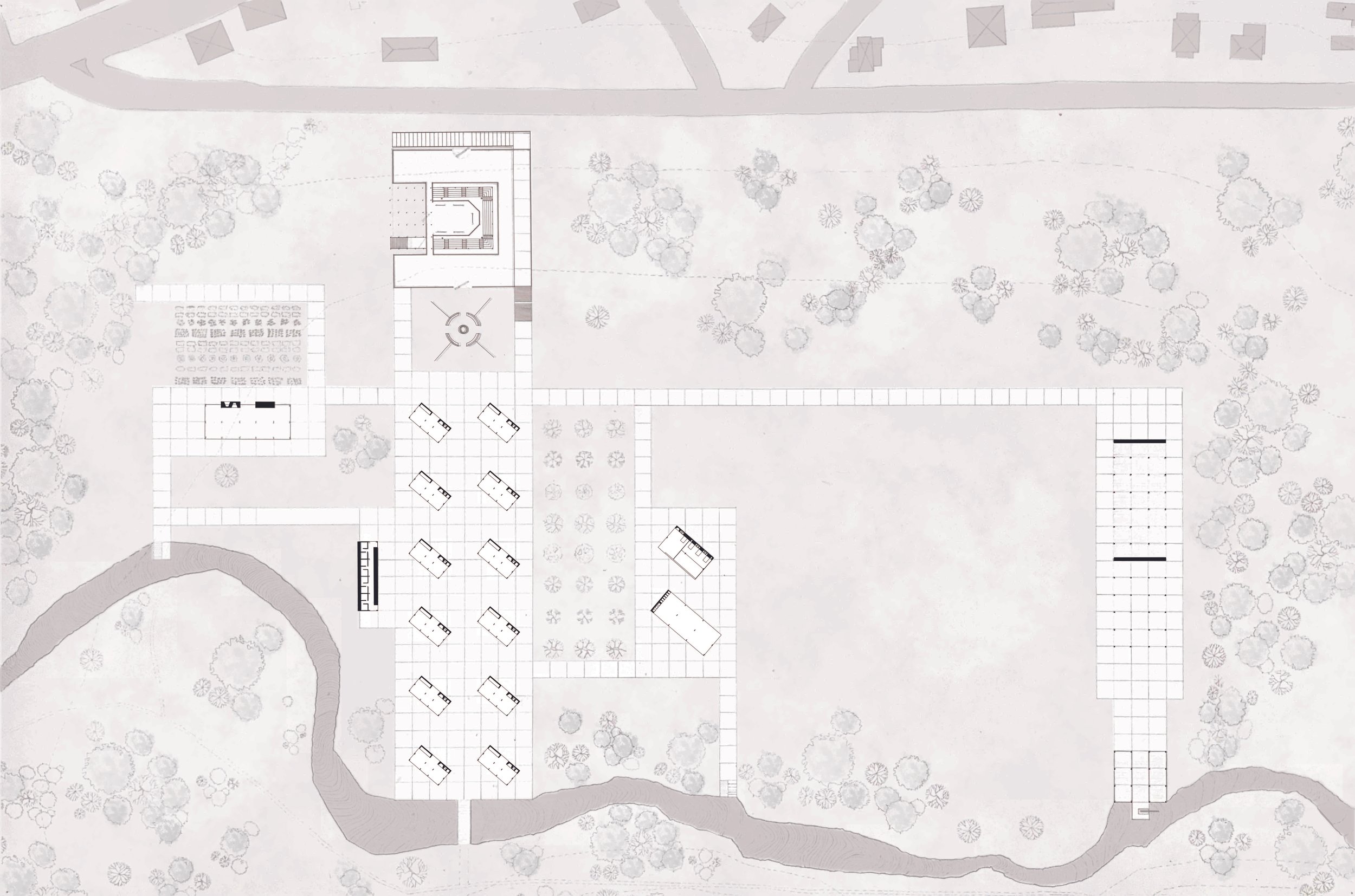
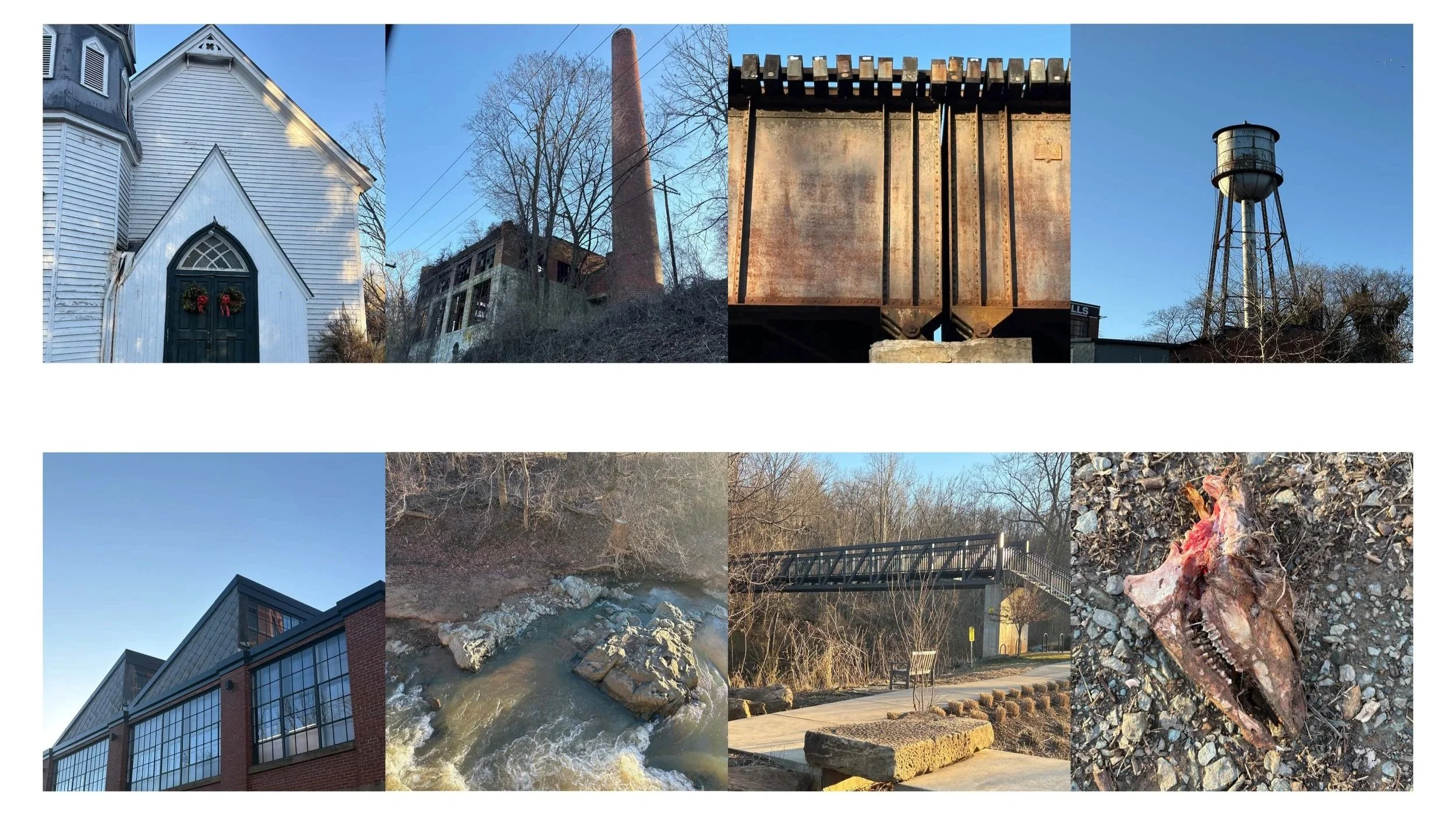
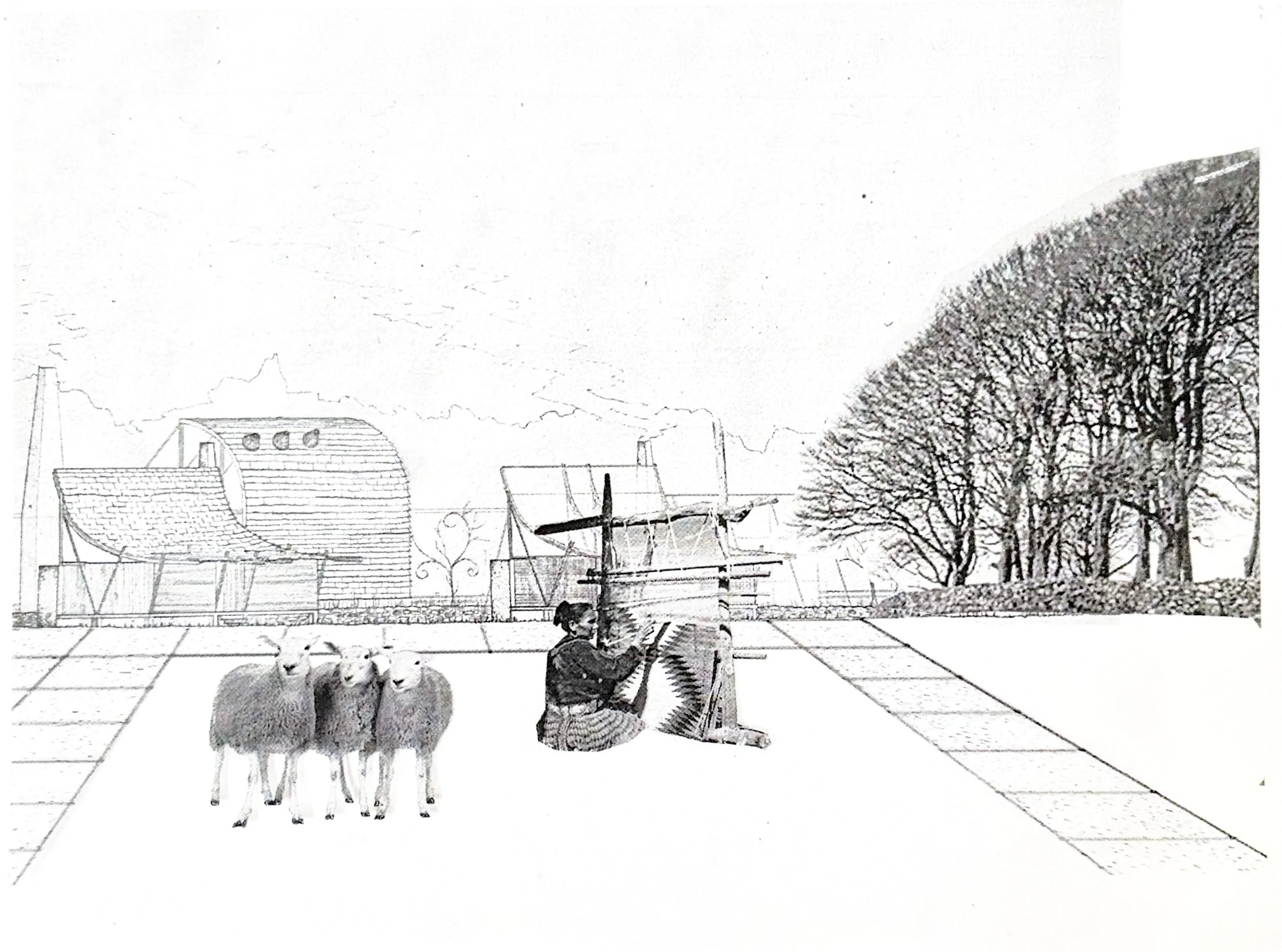
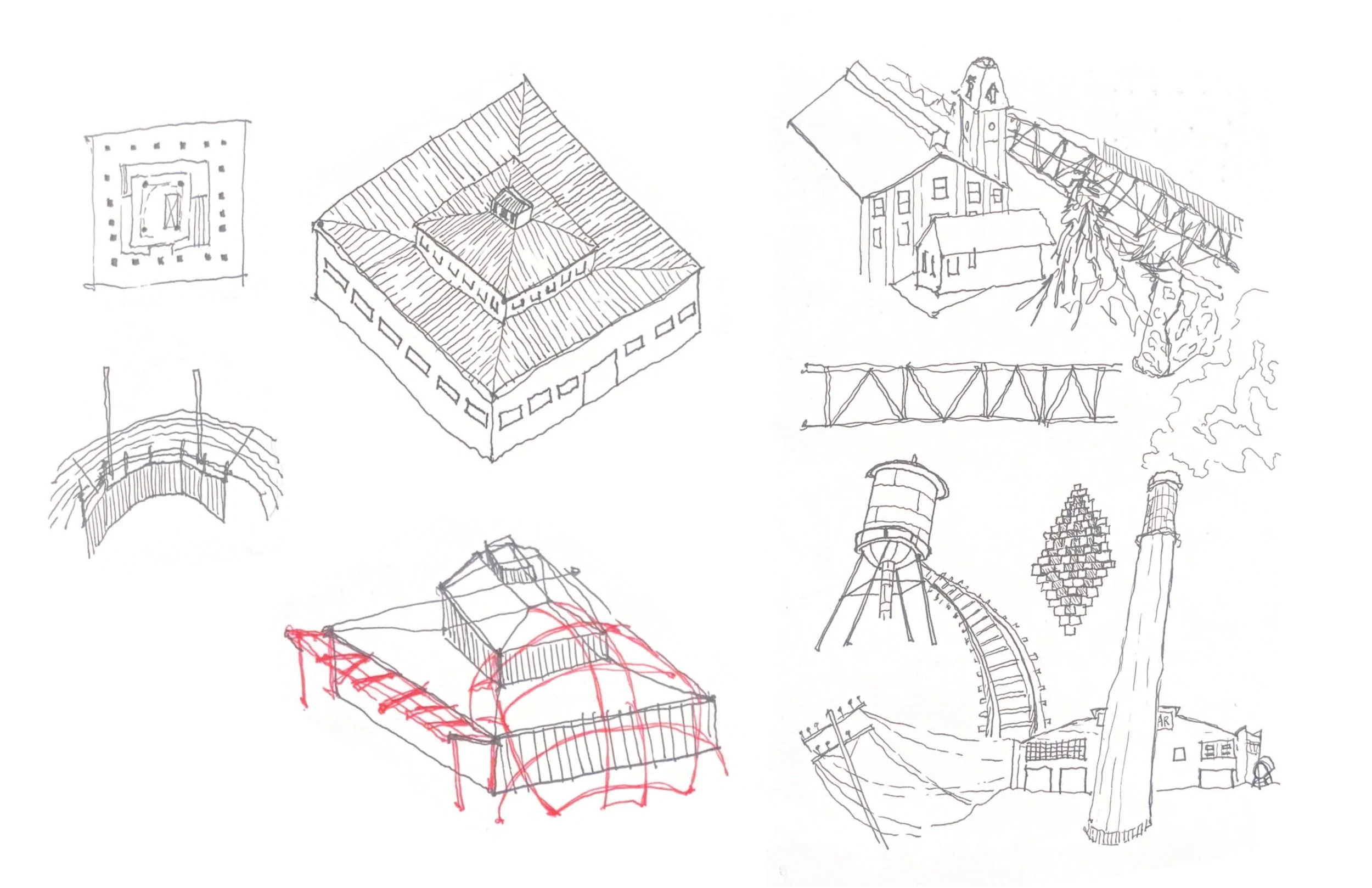
The project proposes a fiber craft residency on the pre-existing site of the abandoned Hogwaller Livestock Barn. Its location on the River repositions the site as an axis of cultural and ecological* activity for the wider community. The site’s proximity to Relics of lost industry* and the Monacan people strengthens a narrative of place, informing a program centered on fiber and livestock.
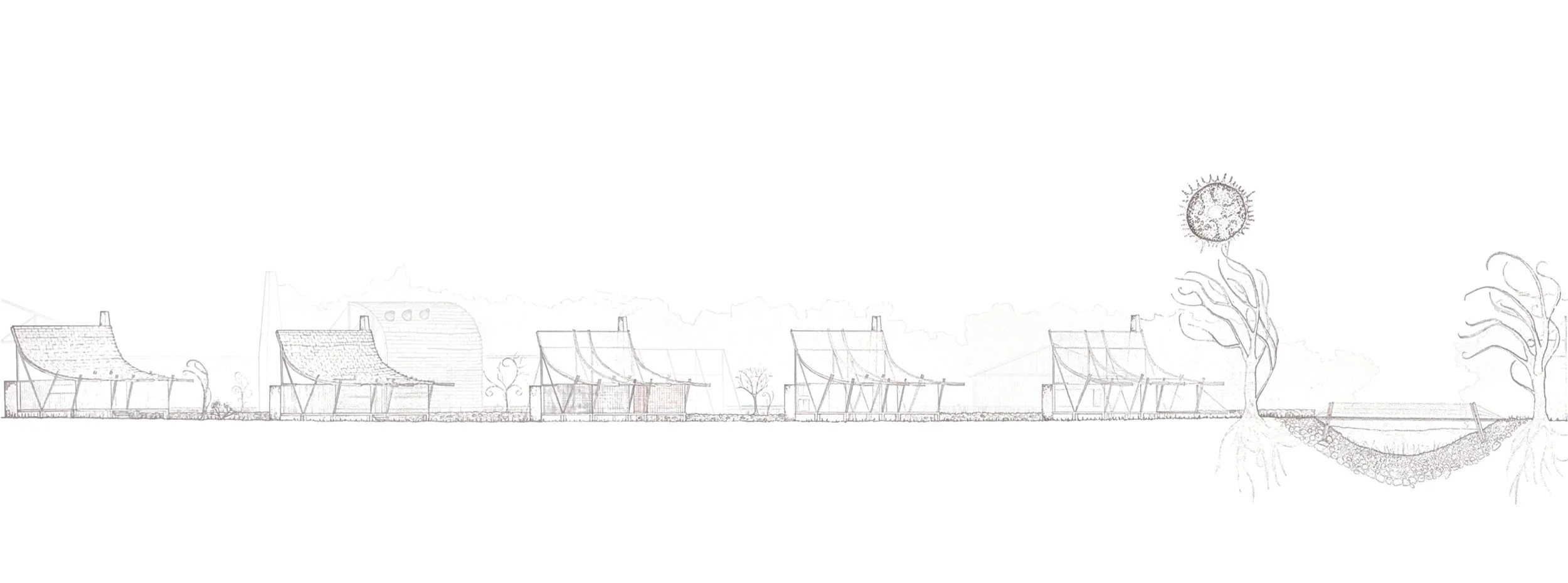
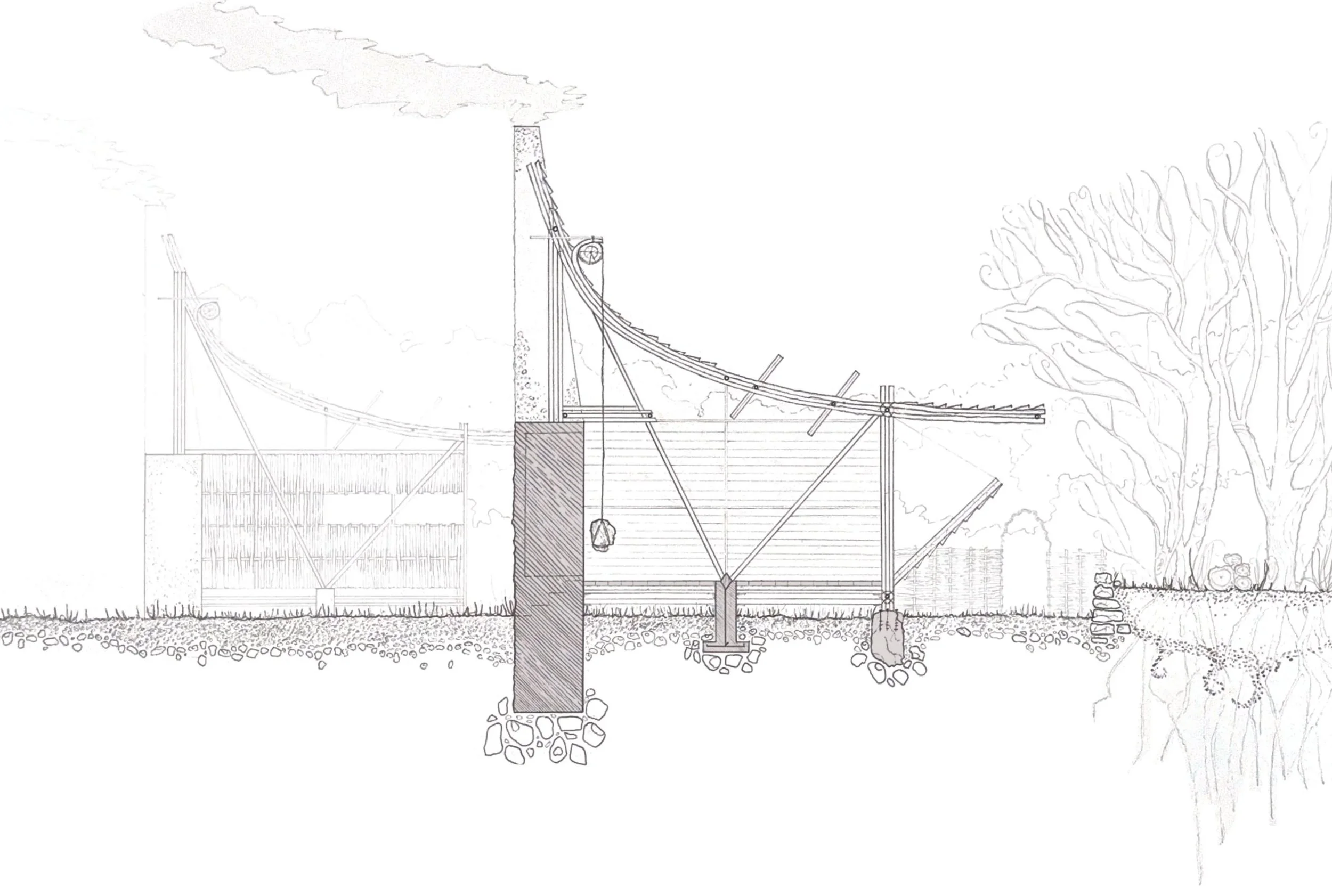
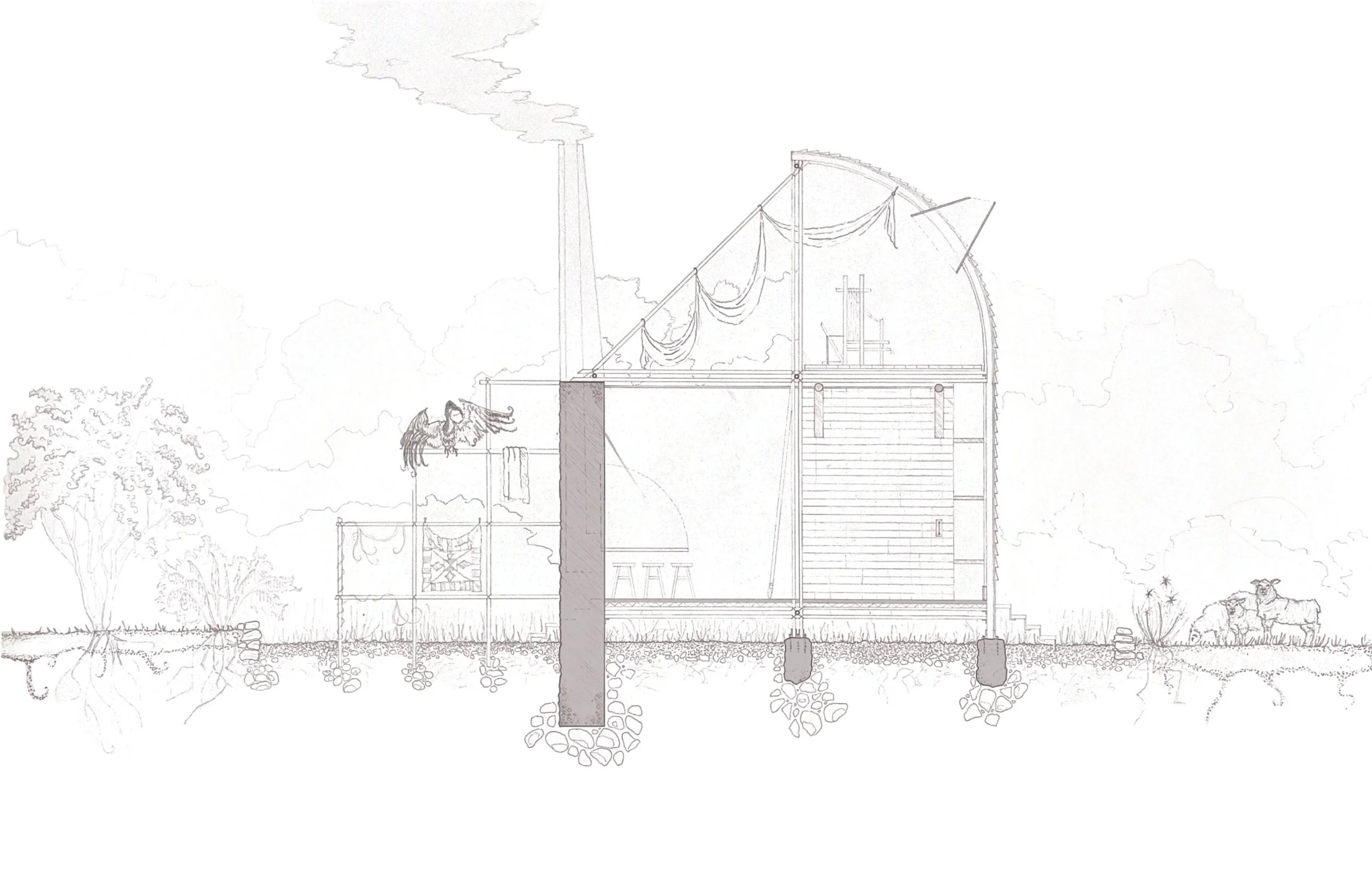
Simple timber and rammed earth frames are raised above the earth, designed to be built by and for their occupants, using materials gathered from the land. While the frames remain constant, their facades are conceived as customizable, like threads woven into a loom. The act of building the community is intended to be gradual, temporal, and adaptable over time.
All processes, materials, food, and fiber, are cyclical and central. Here, the ongoing maintenance of ‘place’ becomes a craft in itself, deepening community involvement. The circular nature of the development and inhabitation invites participants to step away from modern convenience and instead weave craft into every aspect of daily life. In doing so, the project hopes to reconnect the city with its River and history while simultaneously foraging for new traditions.
* The Rivanna was once home to influential industries such as the near by Woolen Mills Factory and the sites Hogwaller livestock auction barn.
CRAFTED COMMUNITY ON THE EDGE OF THE RIVANNA RIVER
THESIS STUDIO | SPRING 25 | PETER WALDMAN | ARCH 4995